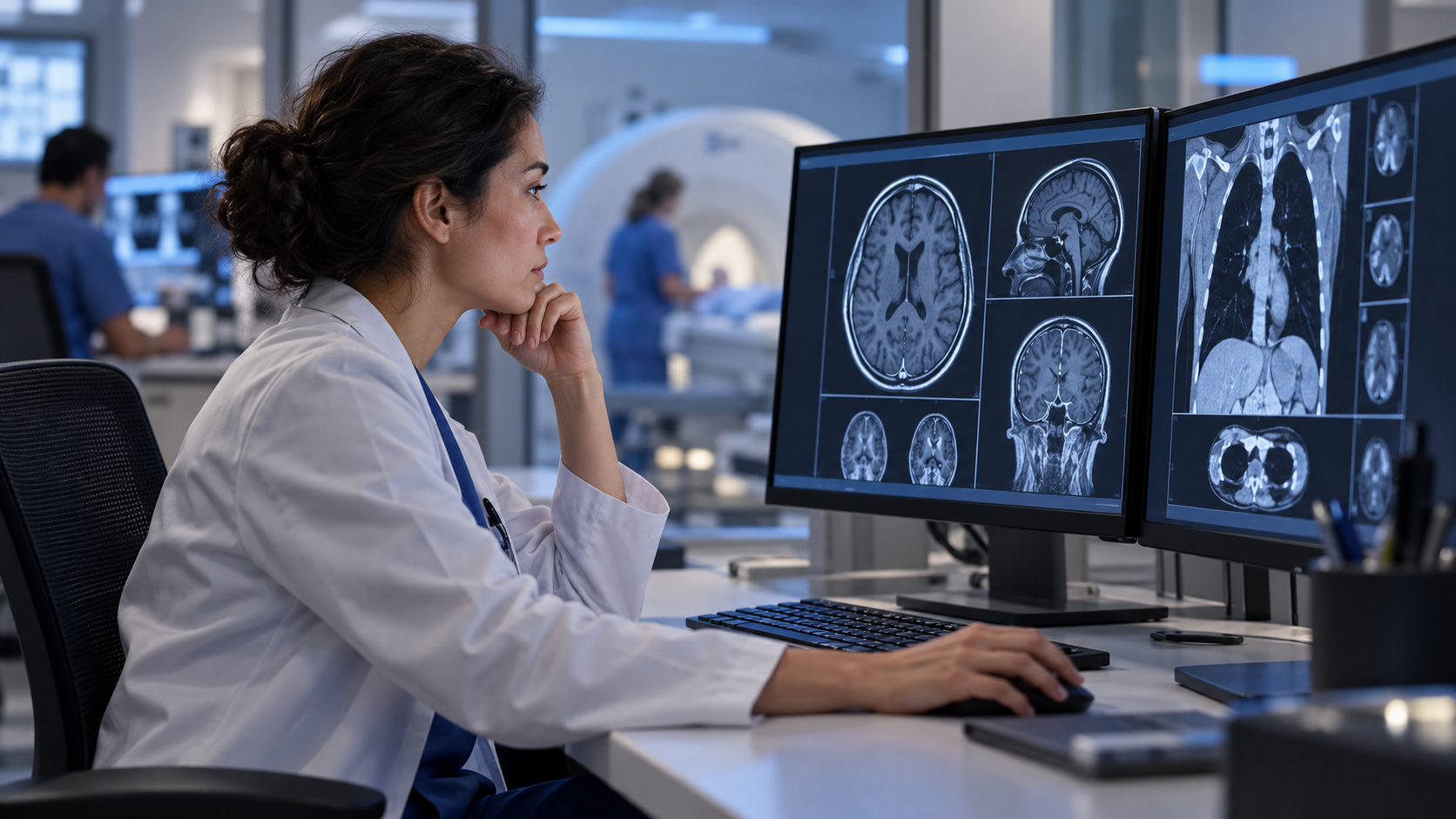
AI can help prioritize studies and surface findings, but its value depends on the full diagnostic workflow. A useful result reaches the right clinician at the right time, remains distinguishable from the original image and can be checked against clinical context.
Integrate into the reading workflow
Separate portals and extra steps can make even a strong algorithm hard to use. Research on radiology AI integration emphasizes standards-based exchange and results that fit the reading workflow. For any imaging service, decide where a result appears, who sees it and how the reader accepts, corrects or dismisses it.
Measure more than accuracy
Before rollout, define the clinical task, intended users and acceptable failure modes. After rollout, monitor false positives, missed findings, turnaround time, reader workload and performance across patient groups and sites. Changes to scanners, protocols and populations can affect performance.
Keep accountability visible
AI findings should carry provenance: the model and version, time of analysis and status of human review. Escalation paths matter when the tool fails, disagrees with the reader or flags a critical result.