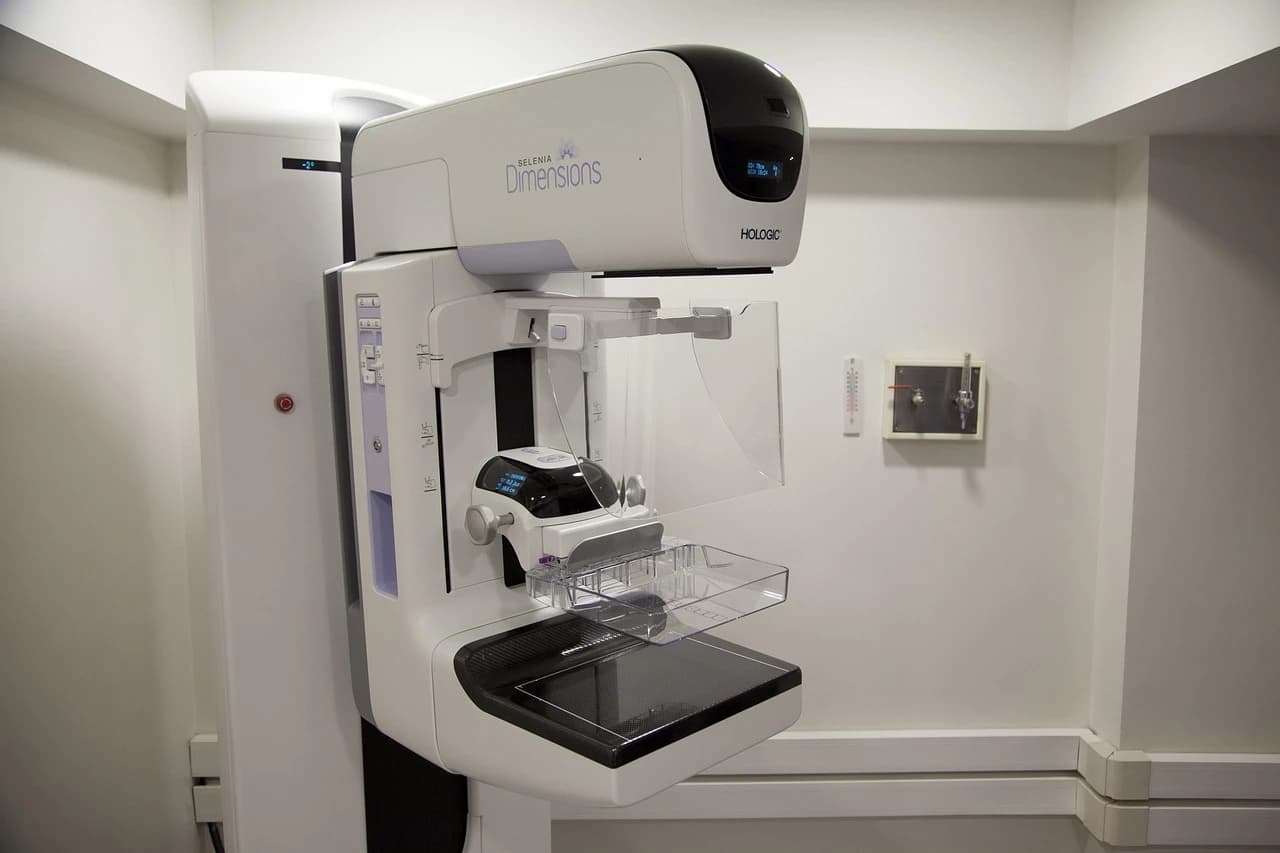
AlarconAudiovisual / Pixabay · CC0 — Pixabay (2017) · Image source
Cancerforskning förklarad med lera och stop-motionanimering
Faculty of Medicine, Lund University · · Source
A short Swedish-language research explainer from Lund University. This 2023 animation introduces the study background; it does not present the 2026 follow-up results.
Opening this video connects to YouTube and may share device information with the provider. The privacy-enhanced player is used; cookies may be used during playback. Playback does not start automatically.
Research: a system working with radiologists
In the Swedish randomized MASAI trial, AI assigned mammograms to single or double radiologist reading and highlighted suspicious areas. The comparator was standard double reading without AI. The 2025 analysis reported cancer detection of 6.4 versus 5.0 per 1,000 participants and a 44.2% reduction in screen-reading workload. This does not mean all radiology work fell by that amount or that physician assessment was removed.
2026 follow-up: a lower rate does not establish superiority
Interval cancer rates were 1.55 versus 1.76 per 1,000, with a ratio of 0.88 (95% confidence interval 0.65–1.18). The prespecified 20% margin for non-inferiority was met; the interval includes 1, so a significant reduction was not demonstrated. Sensitivity was 80.5% versus 73.8%; specificity was 98.5% in both groups. Interval cancers were diagnosed after being undetected at screening.
Clinical assessment: screening has benefits and harms
NCI describes early detection alongside the possibility of false positives, false negatives and overdiagnosis. Overdiagnosis means finding a cancer that would not cause problems during a person’s lifetime; it is different from a false positive. When reading an AI story, we should consider how these outcomes are followed, as well as how many cancers are found.
Regulatory authorization: a separate record
The FDA’s AI device list links to devices authorized for marketing in the United States and their decision records; the agency explicitly states that the list is not comprehensive. A favorable research result does not establish authorization for every software version, intended use or country. This research summary does not replace verification of a particular product’s current regulatory status.
Editorial perspective: what should local implementation establish?
We read these publications as an evaluation of a specific AI workflow alongside radiologists. An institution should define the model and version, imaging equipment, patient population, reading protocol and follow-up plan together. The same outcome should not be assumed to transfer automatically to another center. This article provides neither personal screening advice nor evidence of clinical effectiveness for RAI products.
Sources
- Hernström et al. — Screening performance and characteristics of breast cancer detected in the Mammography Screening with Artificial Intelligence trial (MASAI). The Lancet Digital Health (2025) ↗
Accessed: 2026-10-08 - Gommers et al. — Interval cancer, sensitivity, and specificity comparing AI-supported mammography screening with standard double reading without AI in the MASAI study. The Lancet (2026) ↗
Accessed: 2026-10-08 - National Cancer Institute — Breast Cancer Screening (PDQ®), Health Professional Version ↗
Accessed: 2026-10-08 - FDA — List of Artificial Intelligence-Enabled Medical Devices ↗
Accessed: 2026-10-08
This article is for education and information. Referencing an organization does not imply its endorsement of RAI PACS Pro. This is not a claim of clinical effectiveness for a product or model.