Nanoparticles flu vaccine
UW Medicine · · Source
In this English-language UW Medicine video, Neil King explains the research rationale for nanoparticle influenza vaccines. The YouTube upload is dated 13 October 2021; the institutional news page is dated 23 March 2021. It concerns earlier animal research and does not validate the 2025 PNAS study’s results or the current clinical status.
Opening this video connects to YouTube and may share device information with the provider. The privacy-enhanced player is used; cookies may be used during playback. Playback does not start automatically.
What does a protein nanoparticle carry?
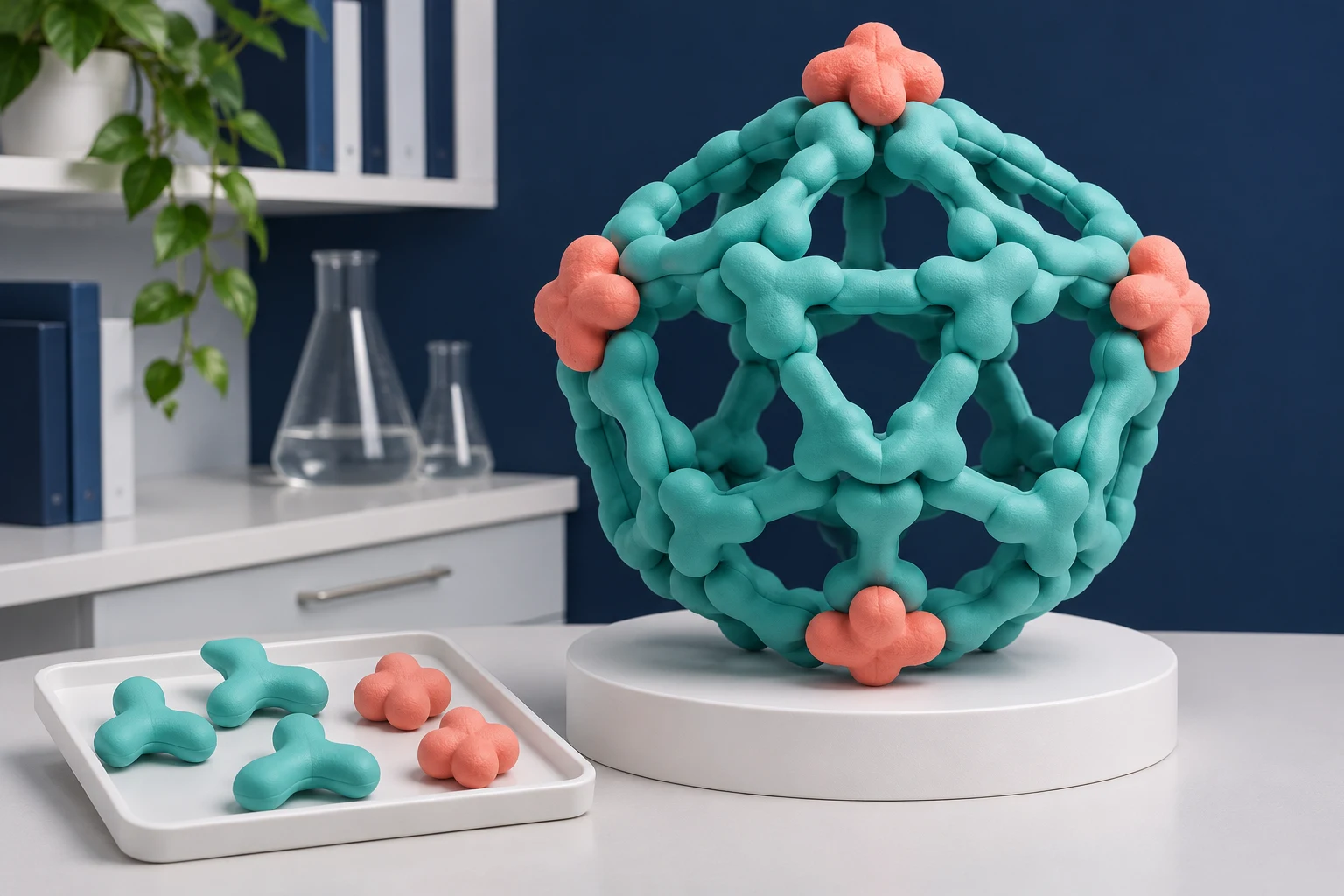
An antigen is a target recognized by the immune system; a scaffold is the protein structure displaying that target in a repeating pattern. The approach examined here computationally designs building blocks for self-assembling scaffolds. Arranging a target’s geometry cannot by itself establish how much protection a person will receive.
How was the AI design tested in the laboratory?
In the PNAS study dated 3 November 2025, AlphaFold2 predicted structures and ProteinMPNN designed sequences at assembly interfaces. Of 88 designs selected for experiments, six formed nanoparticles; three underwent high-resolution cryoelectron microscopy. These figures describe one design study, rather than a general AI success rate or vaccine efficacy.
What does the response in mice show?
The researchers re-engineered one scaffold and equipped it with an antigen derived from influenza hemagglutinin. The resulting structure elicited receptor-blocking and virus-neutralizing antibody responses in mice. Correct particle assembly and immune response are separate experimental steps; neither substitutes for evidence of preventing infection in people.
What is required for clinical use and authorization?
The FDA’s description of the US process includes human studies after preclinical findings, evaluation of safety and effectiveness, and assessment of manufacturing quality. Permission to conduct research differs from a marketing license. Authorization of another nanoparticle vaccine also does not automatically extend to the design examined here.
How should a research report be read?
Editorial assessment: first ask which design was tested, against what comparator and in which experimental system. A computed structure, a measured antibody response and reduced disease in humans are different types of evidence. This study broadens design possibilities; it does not determine personal vaccine choices or the effectiveness of RAI products.
Sources
- From sequence to scaffold: Computational design of protein nanoparticle vaccines from AlphaFold2-predicted building blocks ↗
Accessed: 2026-11-05 - Vaccine Development – 101 ↗
Accessed: 2026-11-05
This article is for education and information. Referencing an organization does not imply its endorsement of RAI Health Pro. This is not a claim of clinical effectiveness for a product or model.