What did the biobank measure?
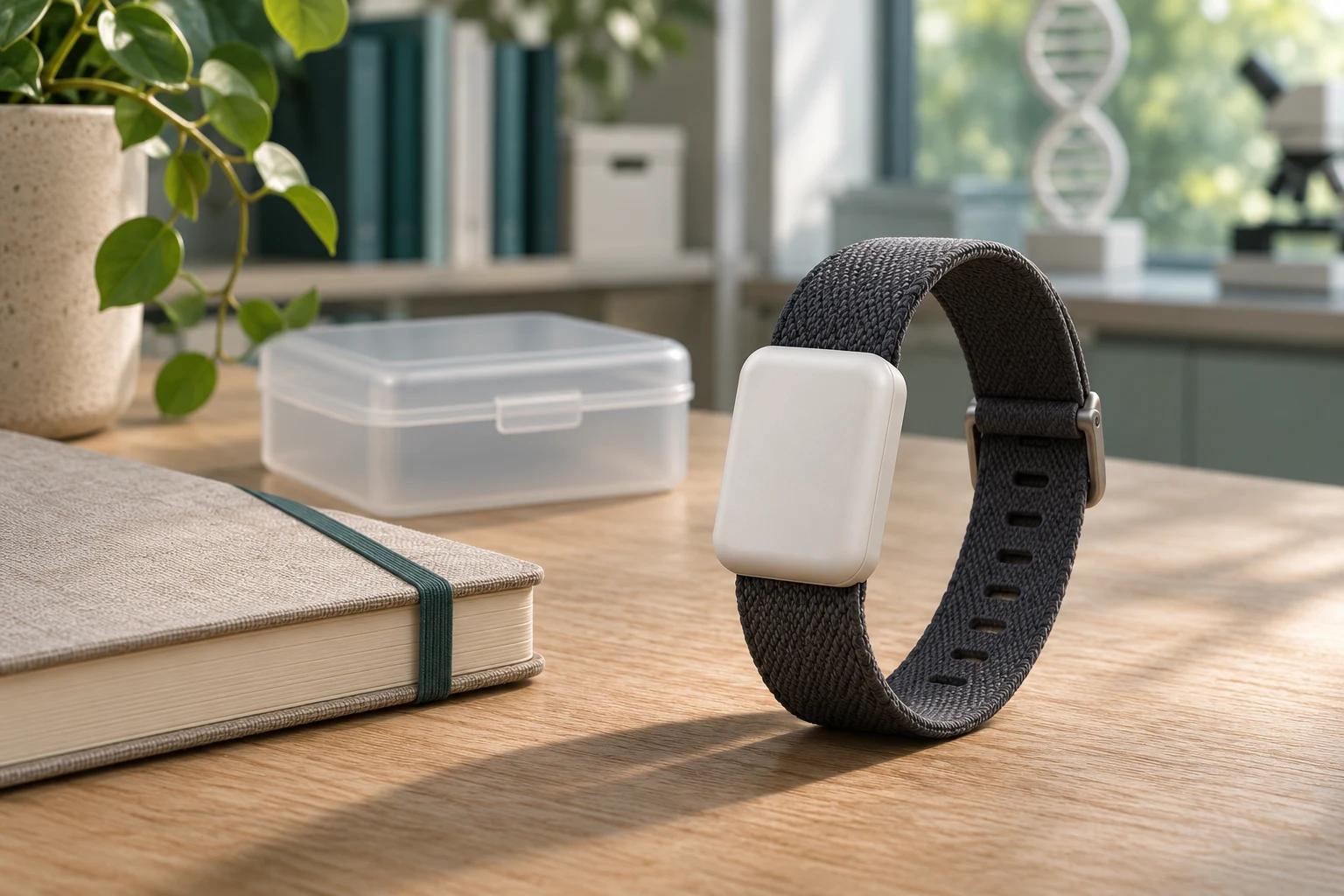
The UK Biobank study asked more than 100,000 participants to wear a wrist accelerometer for seven days. The measurement is a movement signal; interpreting its health significance is a separate research step.
What did the 2024 AI study test?
Researchers pretrained on 700,000 person-days of unlabelled data using self-supervision, then evaluated activity recognition across eight benchmark datasets. These are not patient-level disease diagnostic accuracy results.
What is a person-day?
One person-day is one day of observation for one person; this unit must not be confused with participant count. Many time windows can come from the same person. Our editorial assessment: look for explicit reporting of the level at which training and test data were separated and how different people and devices were represented. Do not read a large window count as a count of independent participants.
What should a new application check?
Our editorial recommendation is to define the target activity, such as walking, and the intended sensor first. Document the model version, sampling settings and handling of non-wear periods. Use a baseline for the same target and examine errors by activity group. These recommendations are not verified product performance or authorization for clinical use.
How does research relate to clinical decisions?
Evaluating an activity classifier does not determine a person’s disease, treatment need or treatment benefit. An intended clinical use requires separate validation. No regulatory authorization was verified for this article; it offers no personal exercise or treatment advice and makes no RAI product efficacy claim.
Sources
This article is for education and information. Referencing an organization does not imply its endorsement of RAI Health Pro. This is not a claim of clinical effectiveness for a product or model.