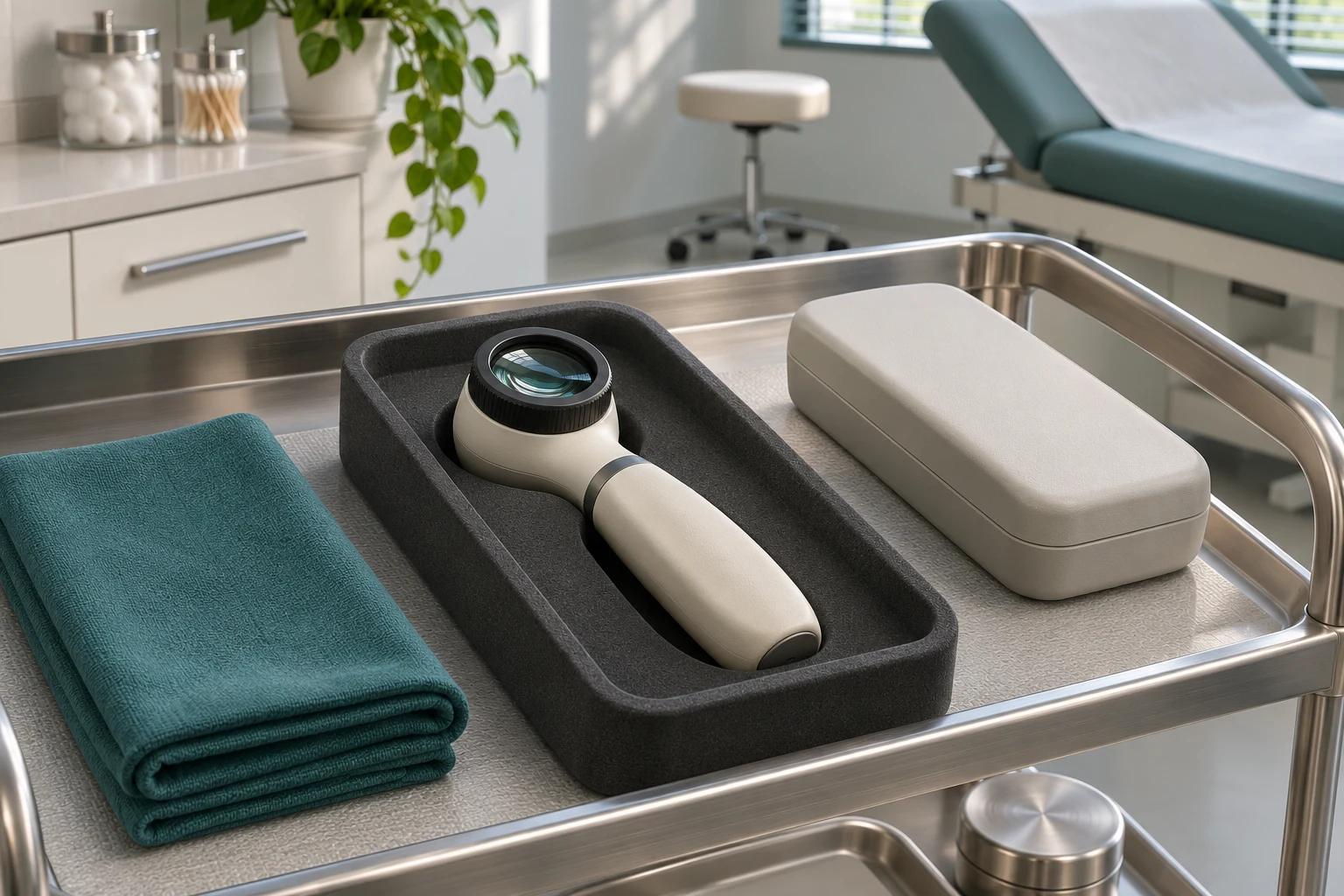
A new handheld device uses AI to screen for skin cancer: Dermatologist explains how it works
Medical Economics · · Source
English-language interview, 2 minutes 4 seconds. Despite “screen” in the publisher’s title, the FDA scope is referral support for lesions already considered suspicious, not general screening.
Opening this video loads the Medical Economics Brightcove player. Your IP address and device information may be shared with the provider, which may use cookies. Playback does not start automatically.
What scope does the FDA decision define?
The De Novo decision dated January 12, 2024 describes DermaSensor assessment of specified skin lesions already considered suspicious in patients aged 40 and above. Its purpose is to assist dermatologist referral decisions. The user is a physician who is not a dermatologist; the device is not for general screening or standalone diagnosis. This US scope does not establish authorization elsewhere.
What does the device analyze?
The FDA technical report describes optical spectroscopy and an AI/ML algorithm evaluating a lesion’s physical properties. This does not mean an ordinary phone photograph will produce the same result in any setting. The device supplies adjunctive information alongside clinical assessment.
What do sensitivity and specificity mean?
DERM-SUCCESS data submitted by the manufacturer to the FDA reported sensitivity of 95.5% and specificity of 20.7%. Sensitivity describes identifying cancerous lesions; specificity describes classifying noncancerous lesions as negative. These are measurements in selected study lesions, not diagnostic accuracy or patient-benefit results for every population.
What should accompany high sensitivity?
Our editorial interpretation: low specificity requires examining the possibility that noncancerous lesions also lead to further evaluation. In an implementation review, document age group, lesion selection, management of incorrect results and referral capacity separately. This is not an implemented institutional outcome or a result validated with a RAI product.
Which clinical boundary must remain?
FDA documents state that the device does not replace biopsy or clinical decision-making. Do not equate regulatory scope, research metrics and actual workflow outcomes. This article offers no personal lesion assessment or treatment advice; citing these sources does not establish RAI product efficacy or expert endorsement.
Sources
- DermaSensor — De Novo classification order (DEN230008), January 12, 2024 ↗
Accessed: 2026-11-23 - DE NOVO CLASSIFICATION REQUEST FOR DERMASENSOR (DEN230008) ↗
Accessed: 2026-11-23
This article is for education and information. Referencing an organization does not imply its endorsement of RAI Health Pro. This is not a claim of clinical effectiveness for a product or model.